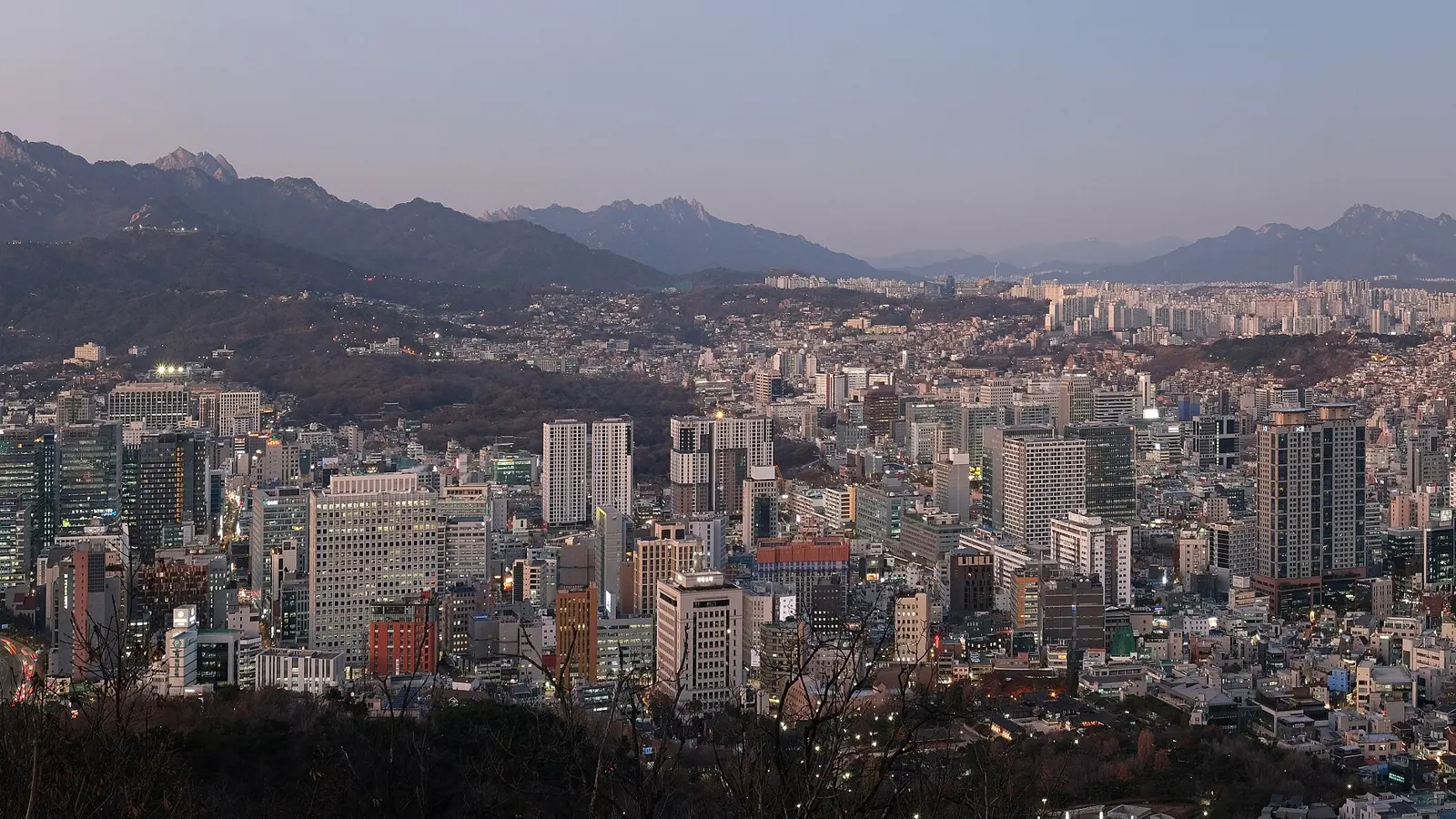
 )}
Inside Seoul the metro is quicker than any car, but the country around the capital is made for day trips: the fortresses of Suwon and Namhansanseong, the DMZ, Nami Island and the dolmens of Ganghwa. Spend your Seoul days by metro, then pick up the car when you head out.
Car hire prices in Seoul
From, total for 7 days
| Pick-up point | Small | Mid-size | Large / SUV |
|---|---|---|---|
| Seoul Incheon Airport | €362 | €362 | €420 |
| Seoul Gimpo Airport | – | €362 | €420 |
| Seoul city | €337 | €337 | €625 |
Select a price to see the cars for the week that price was found.
Total for a 7-day rental, fully insured with everything included. Rates vary by car, availability and how far ahead you book. Updated 17 November 2026. About this price
What's included in the price
Excess refunded in full
If the desk charges the excess after damage, Sunny Cars refunds it.
- Collision damage and theft cover
- Damage to windows, tyres, roof and undercarriage
- Lost or damaged keys and towing after an accident or breakdown
- Third-party liability, topped up to €10 million
- Unlimited mileage
- Local taxes and airport fees
- Fair fuel policy: return the car with the fuel level you picked it up with
Not included: Expressway tolls (recorded by the Hi-Pass unit in the car and charged when you return it); fuel; child seats and other extras you add at the desk; traffic fines and parking.
What to bring
- Driving licence
- Your own licence held for at least 1 year, plus an International Driving Permit and your passport. South Korea accepts permits under the 1949 Geneva and the 1968 Vienna Convention.
- Credit card
- In the main driver’s name, required at the desk. No deposit is charged.
- Driver age
- 25 or older. Each car shows its age limits before you book.
- Additional driver
- Available at the desk for a daily fee.
Picking up your car in Seoul
You can collect your car at Incheon Airport, at Gimpo Airport or in Seoul city. If you spend the first days in the city, pick up the car on the day you head out: the metro is quicker, and parking in Seoul is scarce and expensive.
Car hire at Incheon Airport
The international airport, on an island about an hour west of the city centre. An expressway links the airport to the mainland, and from there the expressways lead south and east without crossing the centre of Seoul. Pick-up instructions are in your booking voucher.
Car hire at Gimpo Airport
The city airport, on the western edge of Seoul, about 30 minutes from the centre. Gimpo handles domestic flights, including to Jeju and Busan, and flights from Tokyo, Osaka, Shanghai and Taipei. The ring expressway around Seoul is close by.
Car hire in Seoul city
Handy if you spend a few days in the city first. Collect the car in the morning, after the rush hour, to be out of the city before the traffic builds up again.
Driving in and around Seoul
The rules for all of South Korea, from the licence you need to navigation and tolls, are under Driving in South Korea. Around Seoul, these are the things to know.
Traffic
Seoul's roads are busy all day and jammed in the rush hours, from about 7:00 to 9:30 and 17:30 to 20:00. Lanes change into bus lanes or turning lanes with little warning; keep to the middle lane and let Naver Map guide you lane by lane.
Parking
In Seoul you park in paid car parks, often in multi-storey buildings with car lifts. Parking on the street is rarely allowed and cameras catch illegal parking. Ask your hotel about parking before you book; many have only a few spaces.
Weekends
On Friday evenings the roads out of Seoul are slow, and on Sunday afternoons the roads back in. The expressways towards Gapyeong and Nami Island are the worst. Go on a weekday if you can, or leave early in the morning.
Day trips from Seoul by car
From the centre of Seoul, Suwon, the Folk Village and Namhansanseong are 40 to 45 minutes away, Ganghwa and the DMZ about an hour, and the garden and island near Gapyeong 1 to 1.25 hours, more on weekends. The map shows the trips and the main roads from the city.

1. Ganghwa Island
Dolmens and temples by the sea, about 1 hour north-west. Ganghwa's prehistoric dolmens are a UNESCO World Heritage Site, the largest a table of stone resting on two uprights. In the south of the island, Jeondeungsa is one of Korea's oldest temples, inside the walls of a mountain fortress.
2. Imjingak and the DMZ
At the border with North Korea, about 1 hour north. Imjingak park looks across the Imjin River towards the north, with the Freedom Bridge and a steam train left from the Korean War. The Third Tunnel and Dora Observatory can only be visited on a guided tour from Imjingak: bring your passport and check the tour times before you go.
3. Garden of Morning Calm
A garden in the hills, about 1 to 1.25 hours north-east. A garden of Korean landscapes, from a pine valley to a sunken garden, in a valley near Gapyeong. In winter it is lit by millions of lights in the evening.
4. Nami Island
A river island of tree-lined avenues, about 1 to 1.25 hours north-east. Park at Gapyeong wharf and take the short ferry across. Avenues of ginkgo, birch and metasequoia make the island a classic in autumn. On Sunday afternoons the road back to Seoul is slow; leave early or late.
5. Namhansanseong
A mountain fortress, about 45 minutes south-east. The walls of this UNESCO-listed fortress run for over 10 km along the ridges above the city, where the king took refuge in 1636. A walk along the walls to the gates gives views over Seoul.
6. Korean Folk Village
Old Korea brought together, about 45 minutes south. Houses, workshops and markets from the Joseon era, moved here from across the country, with craftsmen at work and daily performances of music, acrobatics and horseback skills.
7. Suwon Hwaseong
A royal fortress city, about 40 minutes south. The walls of Hwaseong, built in the 1790s and a UNESCO World Heritage Site, run for almost 6 km around the old centre of Suwon, with gates, watchtowers and the restored palace of Hwaseong Haenggung inside.
Best time to visit Seoul
April and May, and September to November, are the best months: mild, dry and clear, with cherry blossom in early April and autumn colours in late October. July is the rainy season and August is hot and humid. Winters are cold and dry, often well below freezing.
Frequently asked questions
How much does car hire in Seoul cost?
A week of car hire in Seoul starts at €337 for a small car, €337 for a mid-size car and €420 for a large car or SUV. That is the total for seven days, fully insured with everything included. Rates vary by car, availability and how far ahead you book. Updated 17 November 2026.
Is there an excess when I hire a car in Seoul?
Yes, a local excess. If the desk charges the excess after damage, Sunny Cars refunds it. Updated 17 November 2026.
Can I cancel my car hire in Seoul for free?
Yes. Cancel free of charge up to 1 hour before your rental starts, during Sunny Cars’ opening hours. After that, the full price of the booking applies. Sunny Cars is based in Germany, several hours behind most of Asia. To be safe, cancel the day before your pick-up.
Do I need a credit card to hire a car in Seoul?
Yes, a credit card in the main driver’s name is required at the desk. No deposit is charged.
Which driving licence do I need to hire a car in Seoul?
Your own licence, held for at least a year, plus an International Driving Permit and your passport. South Korea accepts permits under the 1949 Geneva and the 1968 Vienna Convention, for one year from the day you arrive. Arrange the permit before you travel; the desk cannot hand over the car without it.
Is it worth hiring a car in Seoul?
For the city itself, the metro is quicker and parking is expensive. A car is worth it for trips out of Seoul, to Suwon, the DMZ, Nami Island and Ganghwa, and for travelling on to the rest of the country.
Does Google Maps work for driving in South Korea?
Not for driving directions: as of November 2026 Google Maps shows public transport in South Korea, but no routes by car. Install Naver Map before you travel. It has an English version and gives turn-by-turn directions with warnings for speed cameras.